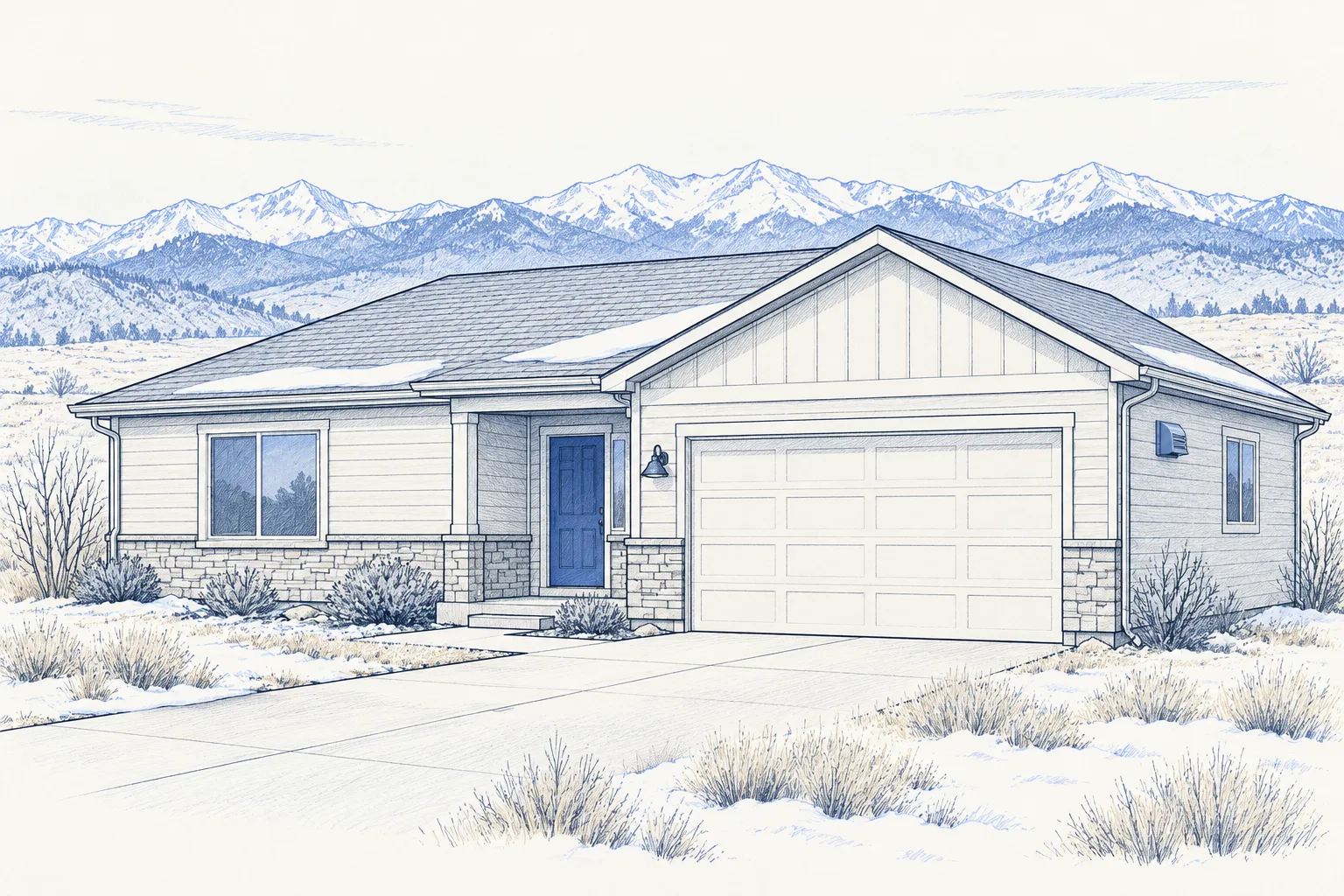
The heat is on, the windows are closed, and the humidifier is already running. Now a ventilation quote promises more outdoor air. A fair next question is: “How will that change the moisture indoors?”
Denver and the Front Range are useful examples of cold, dry conditions. A mountain address can differ substantially from a nearby city. These regional examples are orientation, not an equipment selection or a statement of your current code zone. The DOE county climate reference is a starting point for that discussion.
What changes what you shop for
Put an ERV on the comparison list if winter air is already uncomfortably dry. Its moisture transfer can reduce the drying caused by ventilation. That does not make it a humidifier or guarantee a particular indoor reading.
A small, very tight, busy home can have the opposite problem: too much winter moisture. Building Science Corporation uses household size, leakage and occupancy to explain why climate alone cannot settle HRV versus ERV.

Give the installer a week of clues
Make a simple note each morning: bedroom temperature, humidity, CO2, number of sleepers, and whether a humidifier was running. Add a photo if a window stays wet.
Keep the readings separate. CO2 helps describe ventilation for the occupants; it does not tell you the room's moisture level. “Dry and stuffy” is a possible combination, and neither description is enough to size a system.
Your mountain-home shopping list
| Ask for | Why put it in writing? |
|---|---|
| A moisture-recovery comparison | So the recommendation responds to your winter readings |
| Design temperature and elevation | So the proposal uses your site conditions |
| Manufacturer's cold-weather sequence | So you know when preheating or defrost changes operation |
| A duct route to sleeping rooms | So the quote explains how air reaches the rooms you measured |
| Filter access and a smoke plan | So routine maintenance and smoky days are part of ownership |
These are questions for the designer; this guide does not apply an altitude correction or recommend a particular unit.
If the windows are wet, start there
Don't assume a dry regional climate means the house needs more moisture. Cooking, showers, damp foundations and other sources can add water indoors. Persistent condensation can also reveal cold surfaces or air leaks. DOE's cold-weather moisture guide treats moisture control as a building problem as well as a ventilation problem.
Ask the installer to explain what needs investigation before promising that either core will fix it.
The quote worth keeping
Look for an explanation you can repeat back: “We compared both types. Here is why this one fits your measured humidity, and here is how it will ventilate during your coldest weather.” Then compare the installation scope, not just the box price.
Before you request a quote
- Note indoor temperature and humidity in the bedroom for several ordinary winter days.
- Record whether you use a humidifier and whether windows show persistent condensation.
- Ask for an HRV-versus-ERV explanation based on those observations, with cold-weather operation documented.