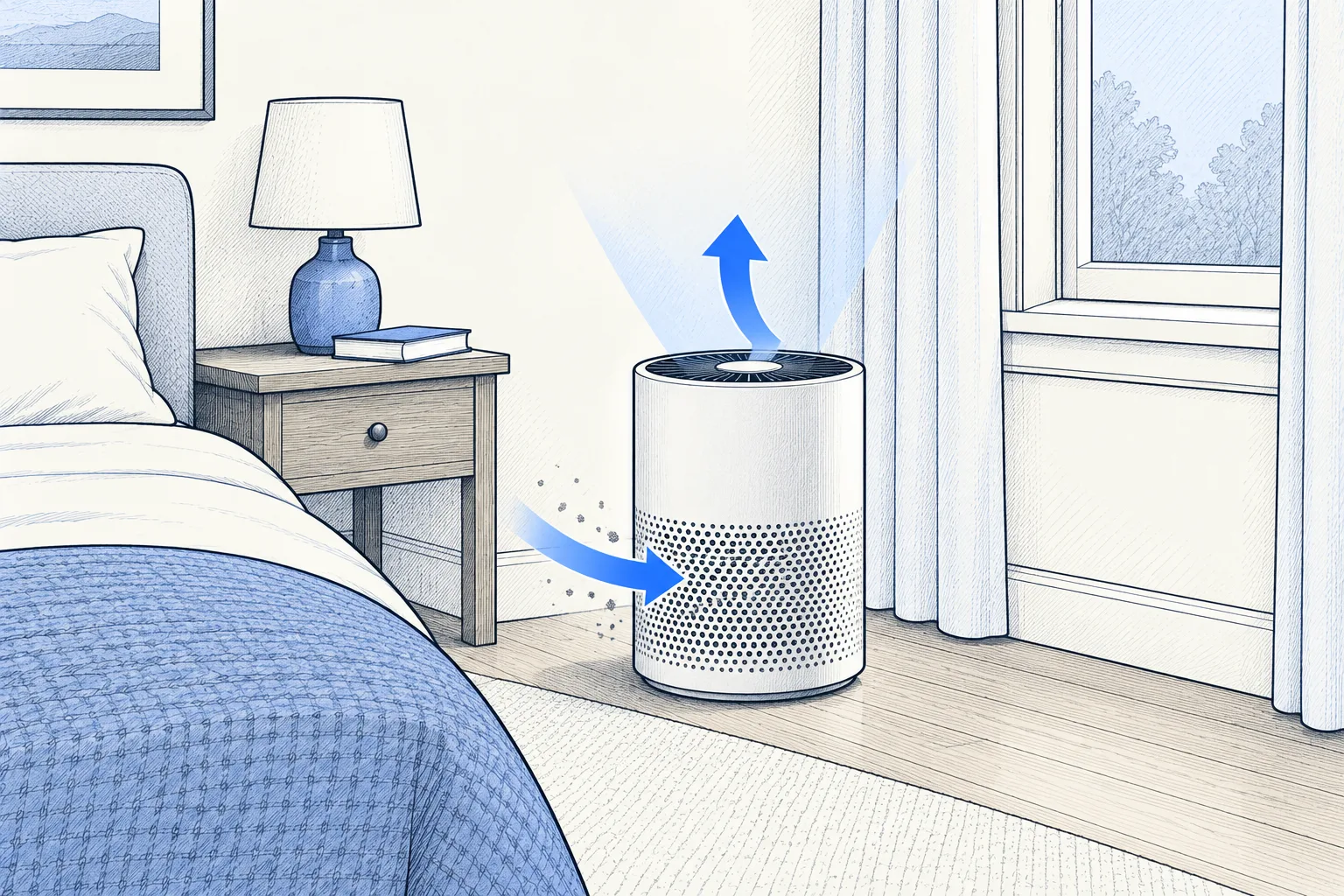
You bought ventilation because the house needed outdoor air. Then the sky turns smoky. This is a real operating question, and it belongs in the quote before installation.
Smoke is not a seventh climate zone. It is a condition that can affect any of the six regional guides, including places far from the fire.
Fresh air and filtered air are different jobs
A normal household CO2 monitor does not measure smoke particles. A low CO2 reading is not an all-clear for opening windows. During smoke events, follow local air-quality and emergency guidance; a bedroom ventilation goal does not override it.
EPA advises keeping smoky outdoor air out and filtering indoor air during smoke events, while also avoiding dangerous indoor heat. If you cannot keep the home safely cool, seek a cleaner, cooler location. EPA's homeowner guide explains the options and precautions.
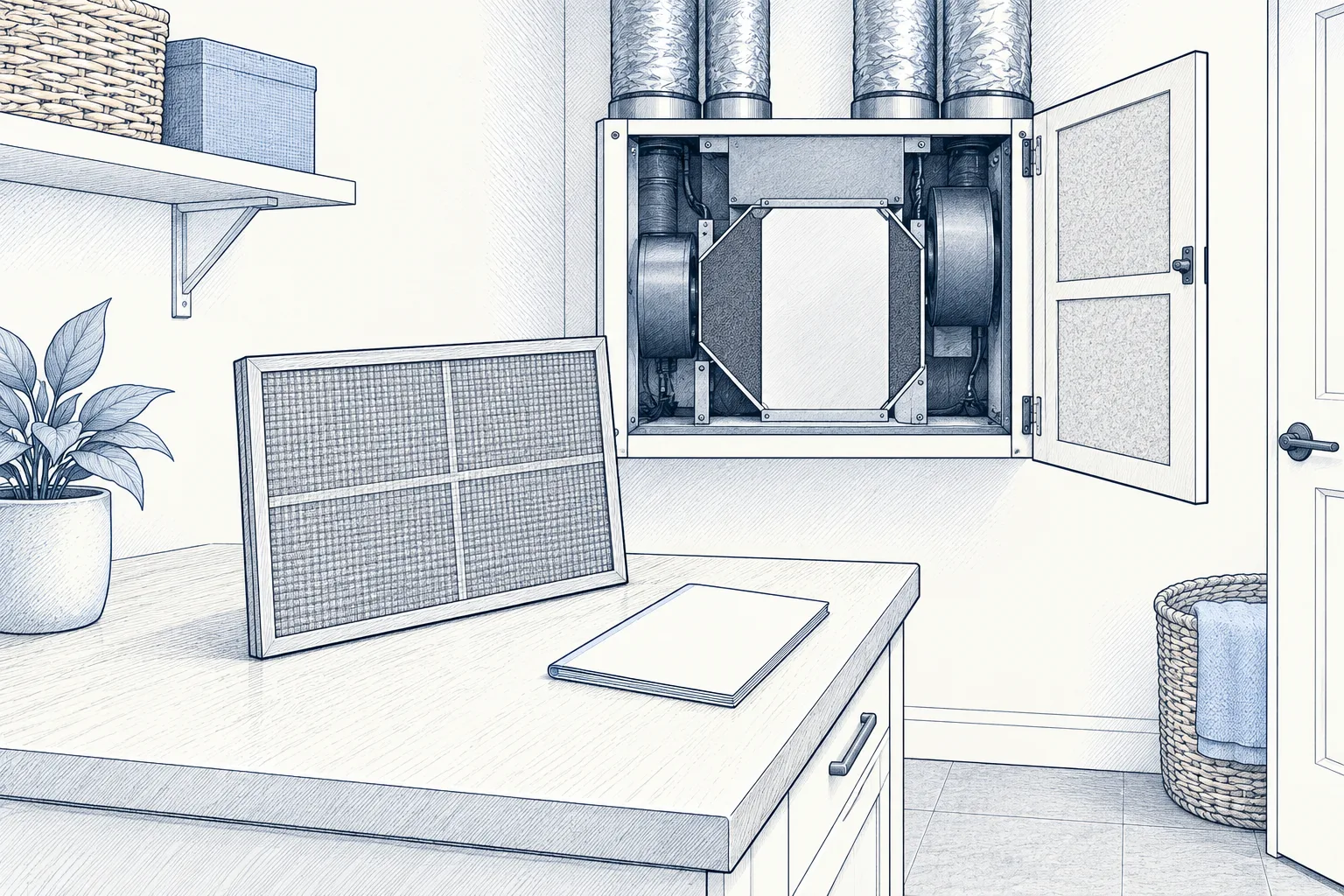
Buy the filter path, not only a filter rating
Ask which filters the exact unit supports, how well they fit and seal, and whether the proposed airflow can be maintained with them installed. Do not put an unsupported high-resistance filter into a ventilator.
EPA recommends MERV 13 filtration, or the highest efficiency the system can accommodate, for compatible central HVAC systems. That is not blanket approval for MERV 13 in every HRV or ERV. Ask the installer to verify the ventilation unit separately. An appropriately sized portable air cleaner can provide additional room particle filtration. EPA's filtration factsheet covers these options.
Ask the installer these five questions
- Where does outdoor air enter? Have them identify the intake and its control.
- How does this system operate during a smoke event? Request the manufacturer-supported procedure, including any temporary reduction or pause in outdoor air.
- What happens to exhaust and pressure balance? Ask how the whole design behaves, including combustion appliances. Never block combustion flues or required combustion-air openings.
- Which filters can I buy locally? Request sizes, supported ratings, access instructions and an initial spare set.
- How does normal ventilation restart? Ask for clear instructions and any available reminder or automatic return feature.
These questions are a shopping brief, not a universal command to switch ventilation off. EPA discusses temporary outdoor-air changes during smoke and resuming normal ventilation afterward; the right procedure depends on the system. Read EPA's ventilation guidance.
Rehearse the controls on a clear day
Before smoke arrives, ask for a walkthrough using the installed controller. Can you find the relevant setting? Does the display make the operating state clear? Do you know which setting restores normal operation?
Keep the written instructions with the filter information. A control you cannot find quickly is not a useful smoke plan.
After the smoke clears
Follow local guidance and your operating plan to resume ventilation. Inspect filters and replace them as needed; heavy smoke may mean changing them sooner. Then return to ordinary bedroom checks. Portable particle filtration and outdoor-air ventilation remain complementary tools.
Before you request a quote
- Find your local air-quality and emergency guidance before smoke season.
- Ask the installer to document outdoor-air controls, supported filters and the restart routine.
- Plan room-air filtration, spare filters and a cooler, cleaner place to go if needed.