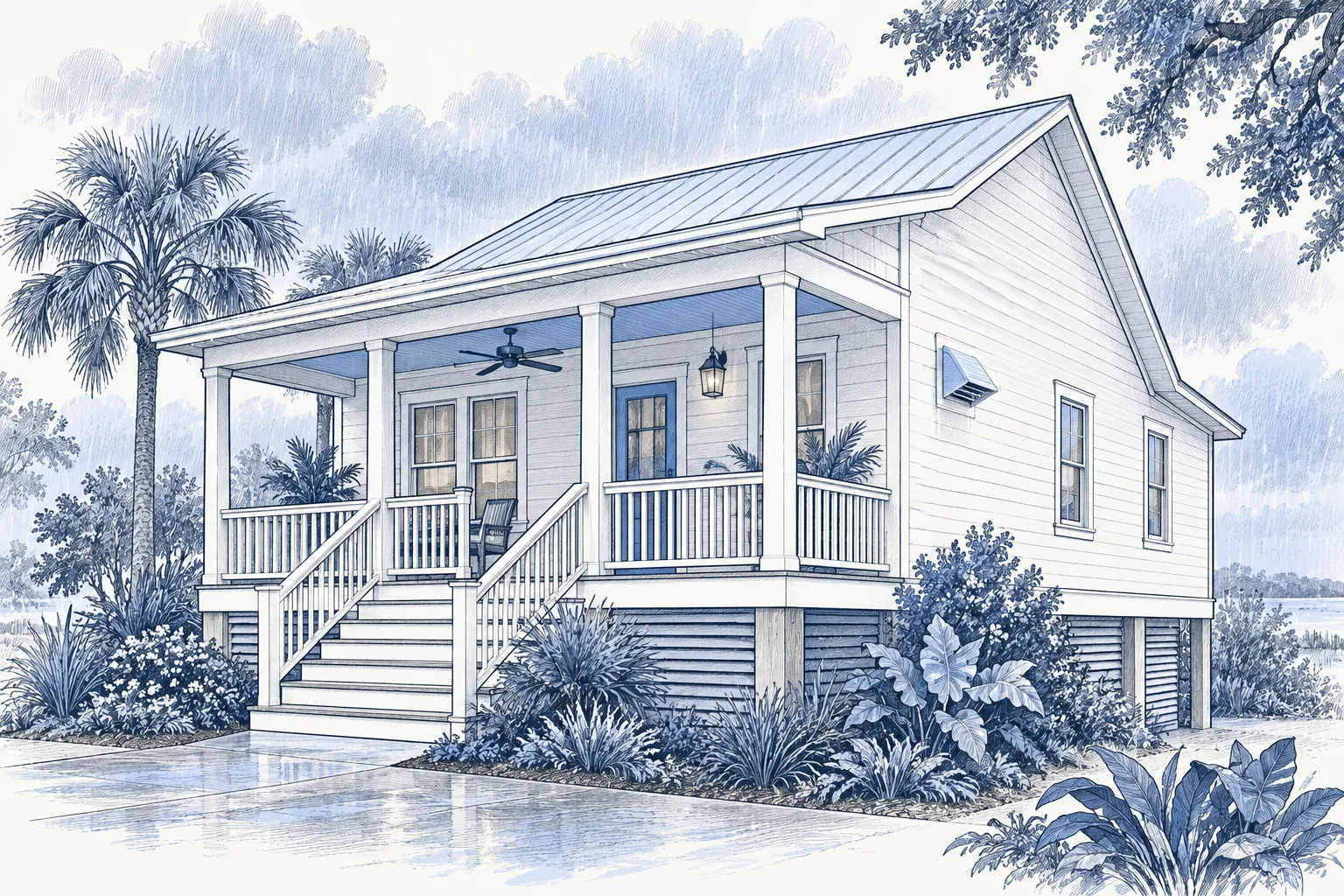
It is raining, the thermostat is satisfied, and the house still feels clammy. This is the day to picture when you compare ventilation proposals for a humid climate.
Think Gulf Coast and much of the Southeast: long stretches when outdoor air brings moisture along with fresh air. Use your home's conditions, not a state-wide rule; coastal, inland and higher-elevation homes differ.
What moves up the shopping list
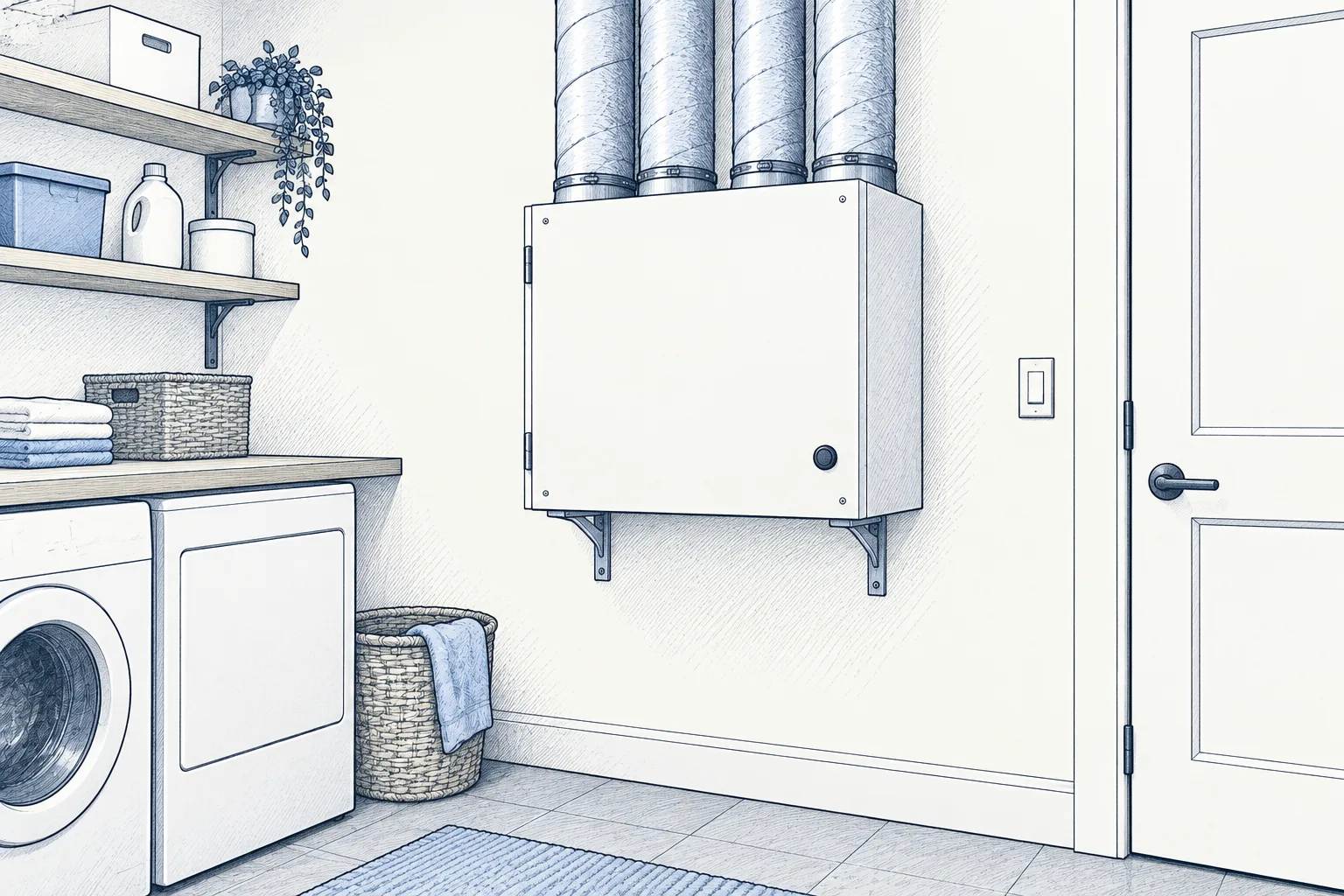
Compare an ERV together with a humidity-control plan. When the air-conditioned home is drier than outdoors, an ERV can transfer some incoming moisture to the outgoing air. It reduces that load; it is not a stand-alone dehumidifier. Building Science Corporation explains the distinction.
Ask about a dehumidifier if the existing cooling equipment cannot handle the extra moisture. It is a calculation and operating question, not an automatic accessory every home needs. DOE's existing-home guide specifically calls for assessing that load.
Ask about the rainy day, not only the hottest day
“How will the house control humidity when the thermostat isn't calling for much cooling?”
Cooling and moisture removal are related but different tasks. DOE highlights this part-load problem in efficient multifamily homes: low cooling demand can leave too little AC operation to remove moisture. That finding is especially relevant to apartments and other low-load homes; it does not establish that every house needs the same solution. Read the DOE explanation.
Compare the whole proposal
| Shopping item | Ask the installer |
|---|---|
| ERV performance | What airflow and moisture-transfer data support this exact model? |
| Humidity control | What equipment responds to humidity when the AC is off? |
| Duct connection | Does ventilation depend on the central blower, and when must it run? |
| Condensation protection | How will cold ducts and equipment be protected from humid surrounding air? |
| Drainage and service | Which components need drains, and can I reach filters and controls? |
Ask for each answer in the proposal rather than accepting “the ERV takes care of humidity” as the entire design.
A quote comparison you can actually use
Imagine two offers at different prices. One includes an ERV only. The other includes humidity sensing, a dehumidification provision and the associated electrical and drain work. They describe different scopes. Ask whether the first installer assessed those needs before comparing totals.
Conversely, ask the second installer to explain the need for each extra component. More equipment is not evidence of a better design.
Keep two before-and-after records
Keep your overnight CO2 record and a separate humidity log. Repeat them after commissioning, including on a mild humid day. Ask who you should call if the humidity plan does not perform as agreed.
Before you request a quote
- Log indoor humidity on a muggy day when the air conditioner runs only briefly.
- Ask who calculated the added ventilation moisture load and how it will be handled.
- Request the controls, drain work and any dehumidifier as explicit quote line items.