Is it the air?

Groggy mornings, a stuffy bedroom, or a monitor number you can’t make sense of? Three ordinary nights tell you whether your bedroom gets enough fresh air (the goal is 800 ppm), what to try first, and whether it worked.

Free for homeowners. Works with the monitor you have.

  1. Door shut. Two people asleep.Every breath adds CO₂. With the door and window closed, it has nowhere to go.
  2. 1,000 ppm.In sleep studies, people slept measurably worse once the night averaged about this much.
  3. 1,450, and you’d sleep right through it.Nothing to smell, nothing you’d notice. That’s why you measure.
  4. Morning. Night average: 1,180.The goal is 800 ppm or less while you sleep. Now you know where this room stands, and what to try first.

An example night: two people, door and window shut. Fictional numbers.

Measure it. Fix it. Prove it.

If the room needs more fresh air: a balanced ventilation system (an HRV or ERV) pulls stale air out of the bedroom and brings fresh air in.Stale air outFresh air in
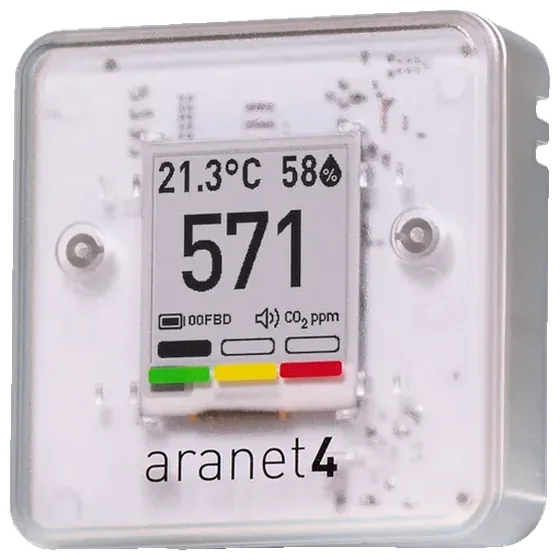
An Aranet4 CO₂ monitor by the bed, the kind that sends the night’s readings to the app.

A monitor by the bed sends each night to the app.

Photo: Aranet

HRV or ERV, in plain words
  • Fresh in, stale out Two fans swap stale indoor air for outdoor air all night, and can supply a closed bedroom.
  • Keeps much of the heat The two streams pass through a core, so winter air comes in warmed. An open window can’t.
  • HRV or ERV? HRV: heat recovery ventilator (heat). ERV: energy recovery ventilator (heat and some moisture).
  • Not a purifier A purifier cleans the air you have but brings none in, so CO2 stays put.

Measure first: you may not need one.HRV vs ERV guideUnits we’ve reviewed

How it works

Five phases in three acts. Most of it is sleeping as usual, and the app shows where you are and the next step.

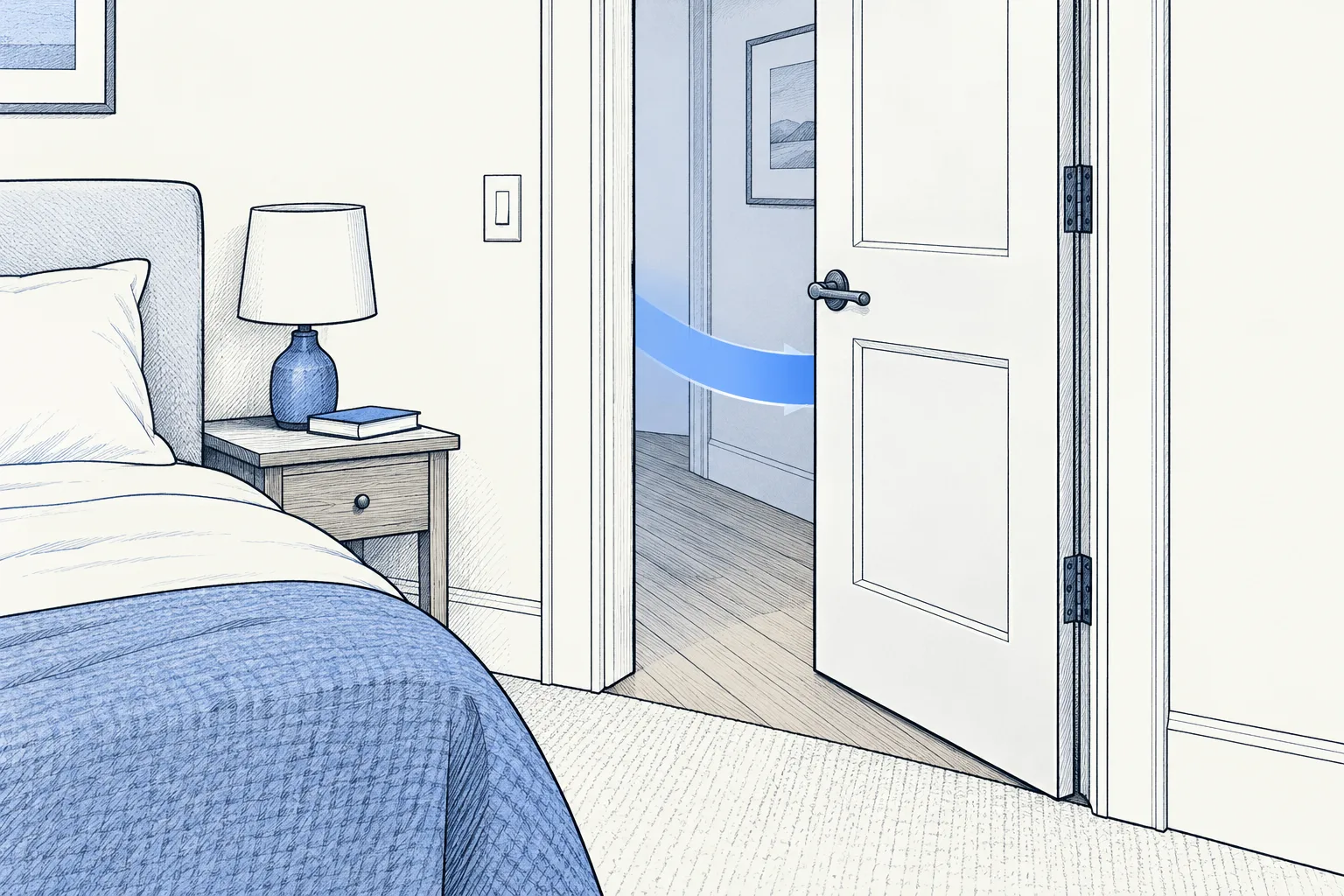
A CO₂ monitor on a dresser across the bedroom, away from the pillow and the window.

Measure it

  1. Measure

    Set up a monitor by the bed and sleep as usual for a few nights. Your room report shows how far the room is from 800 ppm.

    Where to put the monitor
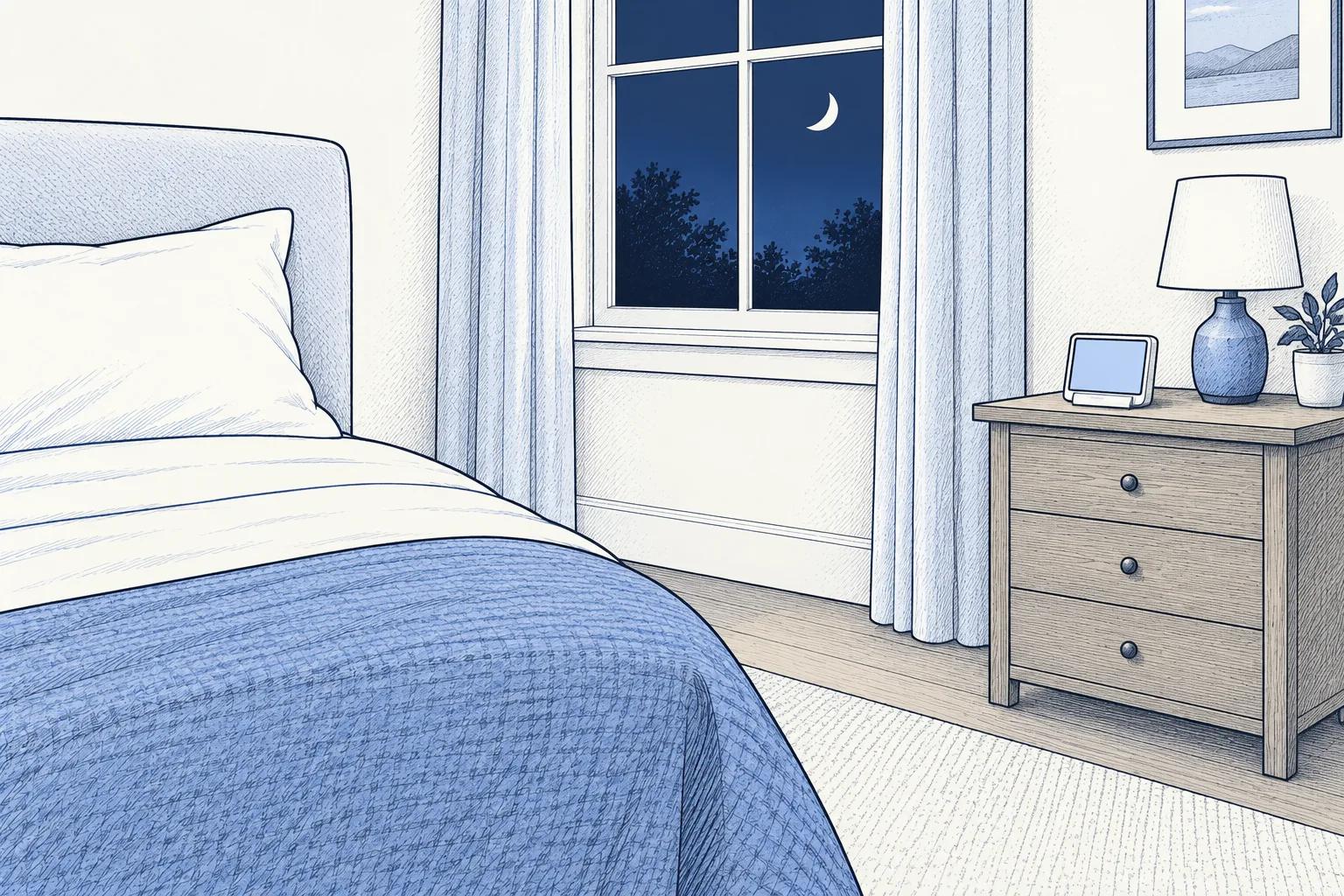
A bedroom door left ajar, with a blue ribbon of air passing between the bedroom and the hall.

Fix it

  1. Try a fix

    Try one free change, like a window cracked or your ventilation turned up, for two or three nights, with the door as you usually keep it. The app judges them against your usual nights. If the room reaches 800, you can stop here.

    Free fixes to try first
  2. Quotes

    Only if you still need a system. The app writes a request from your measurements, you send it from your own email, and quotes are compared on ten essentials.

    How to compare quotes
  3. Install

    Permit, install day and inspection. A ten-item handoff lists what to get before the installer leaves.

    The handoff checklist
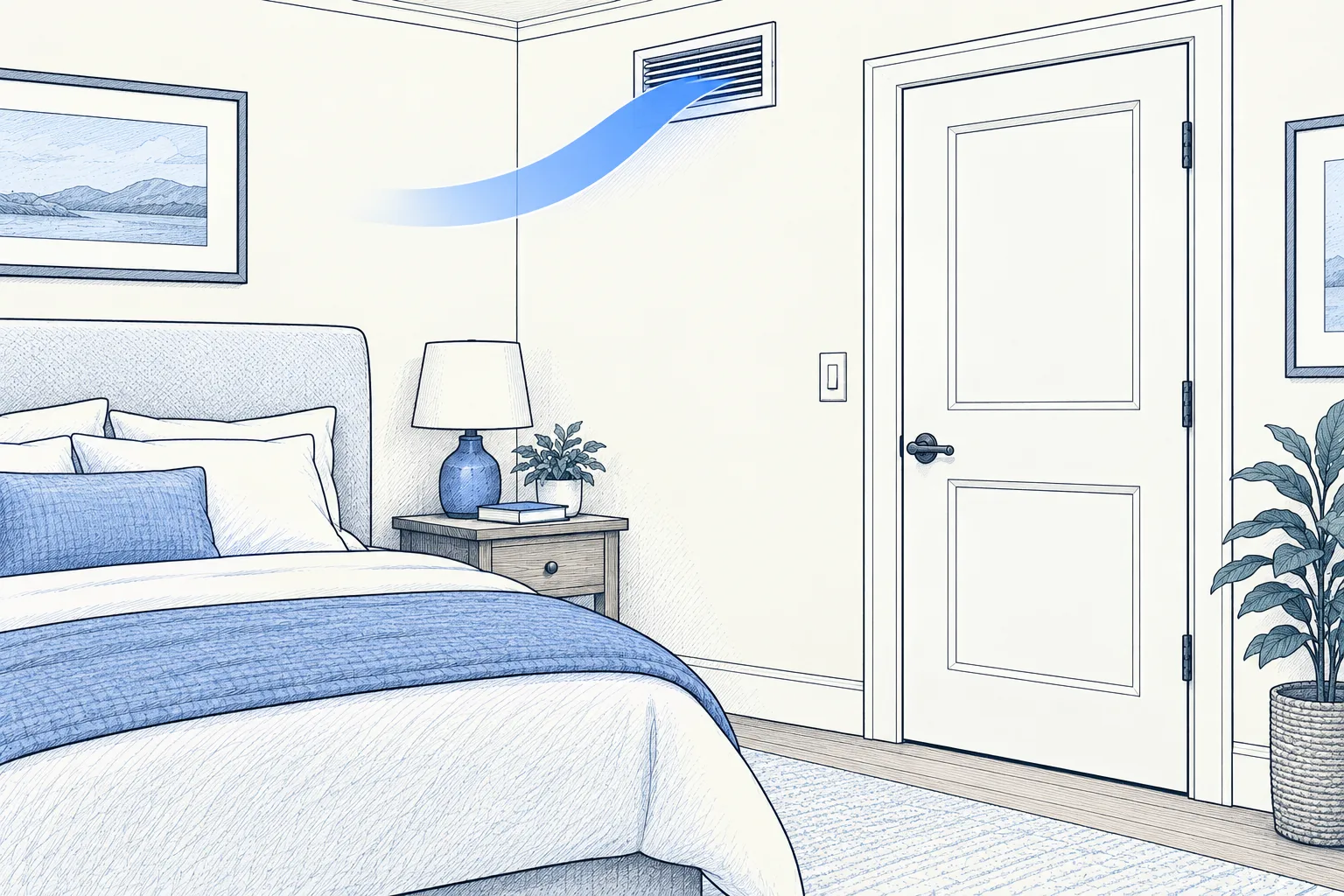
A bedroom with the door shut and a ribbon of fresh air coming from a supply vent high on the wall.

Prove it

  1. Prove it

    Recheck a few nights from two weeks after the install. The goal is 800 or below, with the airflow sheet saved. Then filters and a yearly service.

    How recheck nights work

Already have a quote? Check it

One bedroom, three nights.

Why 800 ppm. A 2025 review of 17 sleep studies for ASHRAE found people slept measurably worse once bedroom CO2 reached about 1,000 ppm. The researchers recommend keeping bedrooms below 1,000, and preferably below 800.

Primary bedroomAverage while asleep, 10:30 pm to 6:40 am
1,180ppm
Stuffy
StuffyBuilding upFresh:the goal4008001,0001,80010:30 pm1 am4 am6:40 amaverage 1,180

Two people, door and window shut. CO₂ peaks at 1,450 a little after 3 am. Average 1,180 ppm: 380 ppm above the 800 goal. Fictional example.
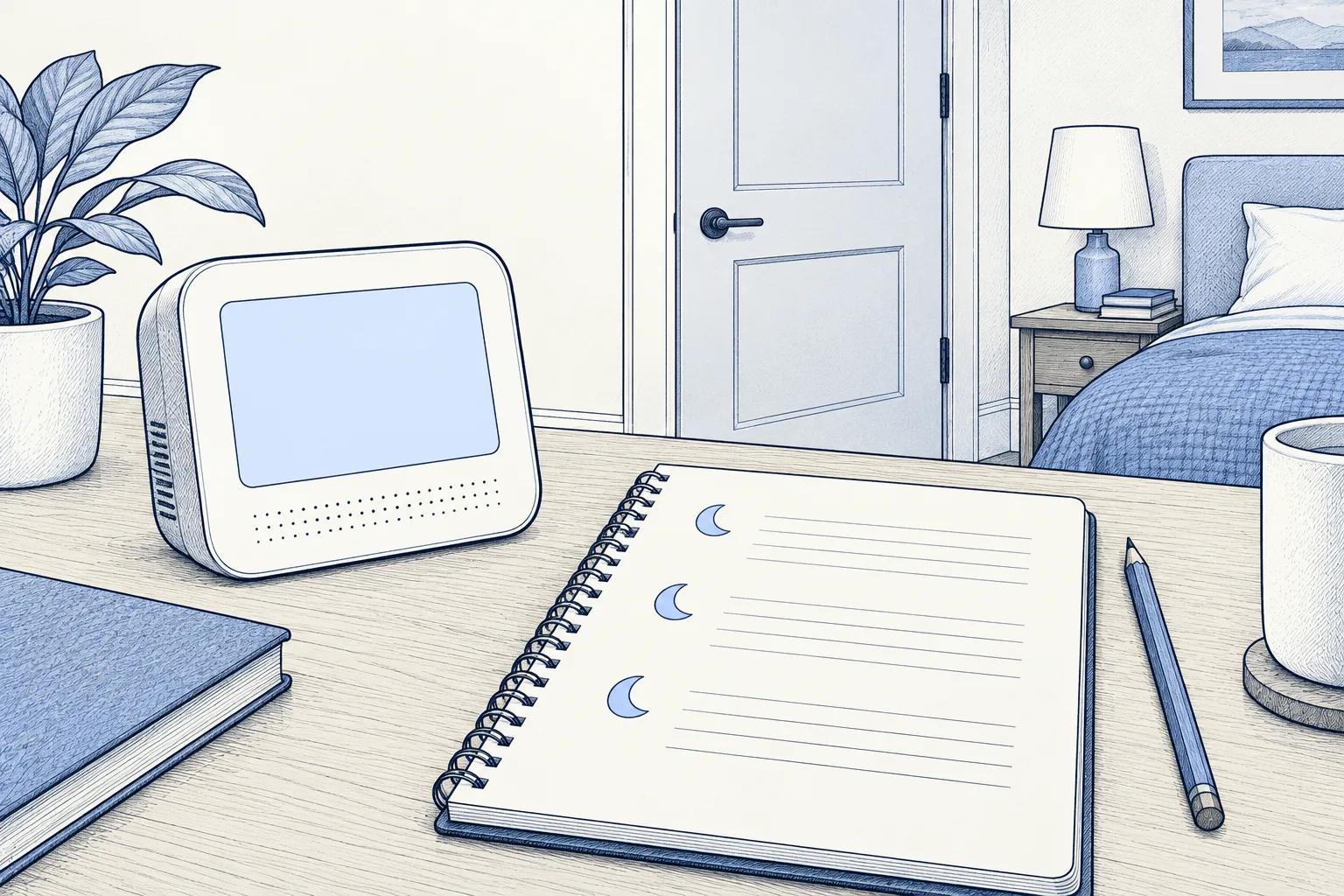
Your phone keeps the night.

Each morning, type one number: the night’s high from your monitor. That works on any phone. The Android app, coming to Google Play, can also record the night by itself from a Bluetooth monitor like the Aranet4.

Get HouseExhale

Measure it

A room report from a few ordinary nights: where this bedroom sits against 800 ppm.
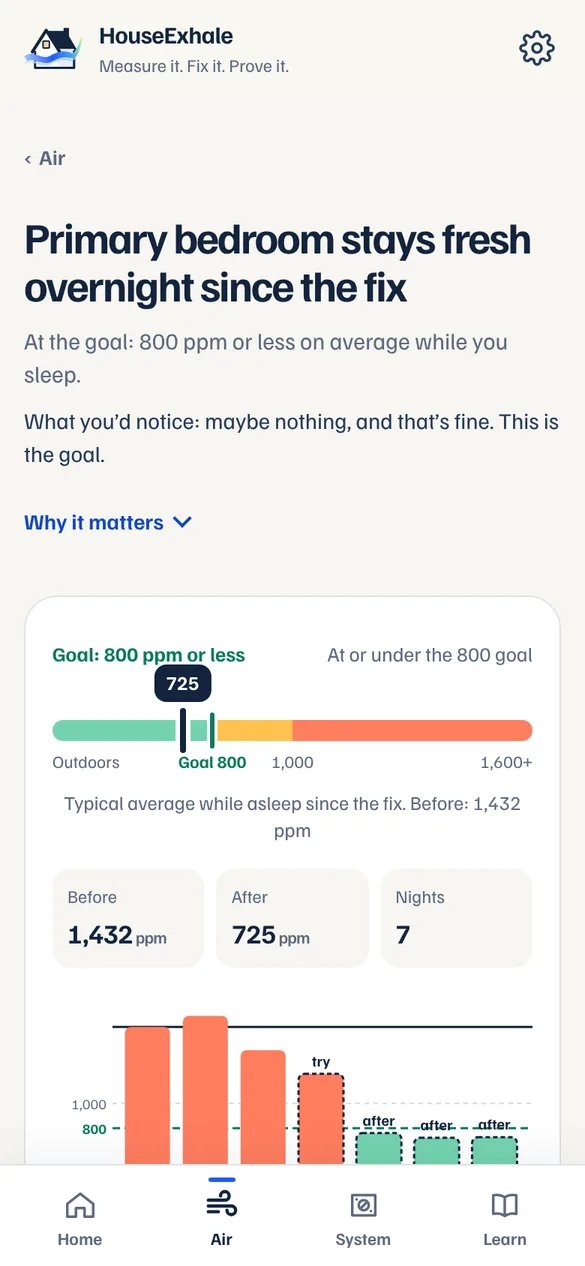
The HouseExhale app’s room report: the primary bedroom stays fresh overnight since the fix, 725 ppm against the 800 goal, with the nights as bars.
Screen 1 of 3

An example home in the app. Fictional readings and companies.

Start with the monitor you have.

Any monitor that measures true CO2 (NDIR) works, and one is enough. These four also connect to the Android app over Bluetooth (for all but the Aranet4, that’s new).
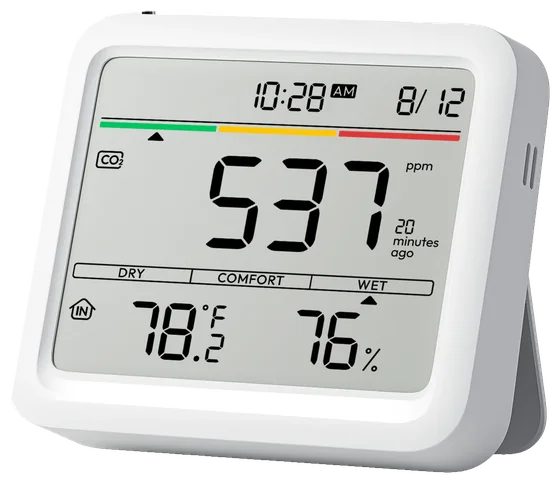
  • SwitchBot Meter Pro CO₂ Monitor: a white desk monitor on a fold-out stand, its large screen reading 537 ppm with temperature and humidity

    SwitchBot Meter Pro CO2

    About $50–$70, checked October 2026

    Lowest price. Keep it on USB power.
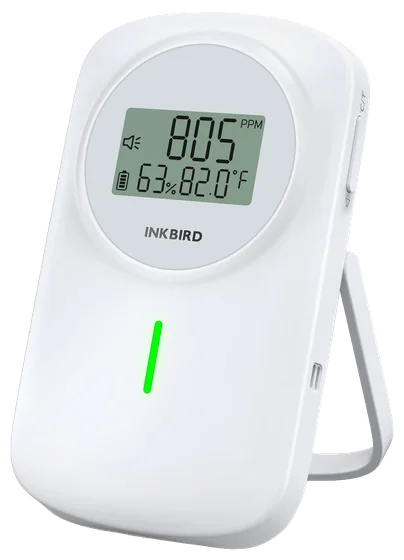
  • INKBIRD IAM-T2: an upright white monitor on a wire stand, with a round screen reading 805 ppm and a green light below

    INKBIRD IAM-T2

    About $70–$80, checked October 2026

    Runs about 60 days on a charge. Get the Bluetooth version.
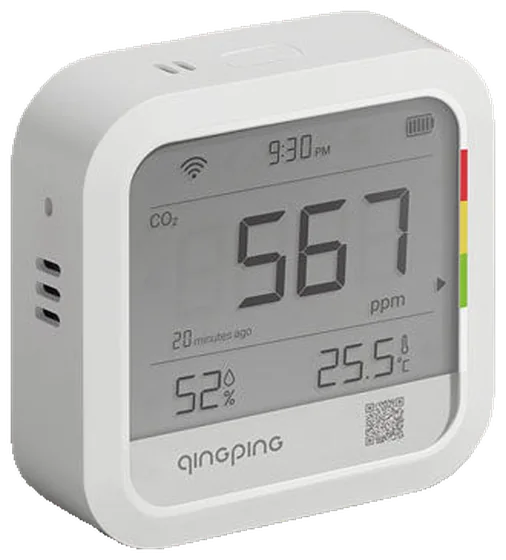
  • Qingping CO₂ & Temp & RH Monitor: a small white cube with a screen reading 567 ppm

    Qingping CO2 Monitor

    About $70, checked October 2026; check before buying

    Rechargeable; plug it in overnight.

  • Aranet4 HOME: a small square monitor in a clear case, with an e-ink screen reading 571 ppm and a green, yellow and red bar

    Aranet4 HOME

    About $150–$190, checked October 2026; check before buying

    Keeps the night in its own memory. AA batteries last years.

Photos: SwitchBot, INKBIRD, Qingping, Aranet All monitors and prices

Questions

More questions and answers

Is a high CO2 reading dangerous?
Not as a poison: bedroom levels are far below any safety limit. It matters because it shows how little fresh air is reaching you, and in sleep studies people slept measurably worse in rooms averaging 1,000 ppm or more than in rooms near 750. Lab studies have also linked levels around 1,000 ppm to lower scores on decision-making tests, and new research keeps coming out. Does CO2 affect how you think? · What CO2 can and can’t tell you
What does the app cost?
Nothing to download or use today. You pay for the monitor, and for a ventilation system only if you decide you need one.
Is there an iPhone app?
Not yet. On iPhone, use HouseExhale in Safari and add it to your home screen; you type the night’s high each morning or import your monitor’s CSV. The Android app is coming to Google Play. Until then, use the web app in your phone’s browser. Get HouseExhale on your phone.
Where does my data go?
Your readings, rooms and notes stay on your phone. If you sign in, a copy syncs to your HouseExhale account, so you can see your room report on the web, type in quotes as they arrive by email, print the report for an installer, and restore it all on a new phone. You can delete that copy any time. The app does count a few steps, like your first night, against a random ID (never your readings), and tells the ad company if you came from an ad; you can turn that off. Look around an example home · Privacy

Start with tonight.

Set the monitor up after dinner, sleep as usual, and check the number in the morning. Three nights from now you’ll know what your bedroom does.