How HouseExhale works
Put a CO2 monitor by the bed for three nights. HouseExhale shows how close your room gets to the goal, has you try a free fix first, and helps you compare ventilation quotes only if you still need one.
The goal800 ppm or less, on average, while you sleep. Why 800?
Works with an Aranet4, a SwitchBot Meter Pro CO2, or any true CO2 monitor. Free on iPhone and Android.
Two people, door and window shut. CO₂ climbs all night. Average 1,407 ppm: 607 ppm above the 800 goal. Fictional example.
What to aim for
800 ppm or less, on average, while you sleep
That’s the goal for a bedroom. It comes from a 2025 review for ASHRAE of 17 sleep studies: once bedroom CO2 reached about 1,000 ppm, people slept measurably worse, and no effect showed at 850 or below. The reviewers recommend 800.
Getting there takes about 17 cfm (8 liters a second) of outdoor air for each person sleeping in the room, at least twice what many home ventilation standards provide. That’s why a lot of well-built bedrooms fall short with the door shut.
Why 800, and not 1,000 · The studies behind it · Questions and answers
- 800 or lessFresh
The goal. Sleep studies saw no effect on sleep at 850 or below, and 800 leaves a margin.
- 801 to 999Building up
Close, but less fresh air than the research recommends for the people sleeping there.
- 1,000 or moreStuffy
Where controlled studies start to see more time awake and lower sleep efficiency.
From the box to proof, one step at a time
The app always shows one next step. Most of the journey is measuring and trying things that cost nothing.
- 1
Set up
Power the monitor, place it by the bed, pick your bedtime. About ten minutes.
- 2
Measure
Live as usual for three nights. With an Aranet4 the app reads each night itself.
- 3
Report
One plain answer: does this room stay fresh, build up, or get stuffy overnight?
- 4
Try a free fix
One night with the door open or a fan running. Same room, one change.
If it works, you can stop here.
- 5
Quotes
A request written from your own measurements. Compare quotes against eight essentials.
- 6
Install
A handoff checklist for install day: airflow sheet, controls, filters, warranty.
- 7
Prove it
Recheck nights in the same room, same routine. Before and after, side by side.
- 8
Maintain
Filter and service reminders, and a seasonal room check.
Three nights, one plain answer
Each night gets one number: its average CO₂ while you were asleep, the same measure the sleep research uses. Your typical night shows how far the room is from the 800 goal.
- Fresh
800 ppm or less on average while you sleep. That’s the goal: sleep studies saw no effect on sleep at 850 or below, and 800 leaves a margin.
- Building up
801–999 ppm on average. Close to the goal, but the room gets less outside air than the sleep research recommends for the people in it.
- Stuffy
1,000 ppm or more on average. In controlled studies, sleep was measurably more disturbed at this level than in rooms kept near 750.
Stricter than the Aranet4’s default colors (green to 1,000) on purpose: the goal follows the latest sleep research. Why 800 and 1,000?
Try a free fix before you buy anything
Change one thing for one night, then compare it with your usual nights. One night is a clue; two that agree are a result.
Leave the door open
Open the bedroom door a few inches for the night. If the air improves, the room needs a better path for air to move in and out.
Run your ventilation or furnace fan
Set an existing HRV, ERV or ventilation system to boost, or run the furnace fan continuously. This shows whether your current system can help.
Crack a window
Only when the weather, outdoor air and security allow. It shows what more outside air does, even if it isn’t a long-term fix.
If you do need a system, ask for the right things
The app writes your quote request from your own measurements, and you send it from your own email. Each quote is checked against eight essentials, side by side.
It also flags a deposit over $1,000 or 10% of the price, and quotes that don’t split equipment from labor.
- Names the exact unit (brand and model)
- Fresh air to each bedroom
- Measured airflow balancing
- Written commissioning report
- Boost or CO₂ control
- Permit and inspection
- Patching and finish repairs
- Labor warranty stated
Works with the monitor you have
No new gadget if you already own a true CO2 monitor. If you don’t, one monitor is enough: move it between rooms and keep it for rechecks.
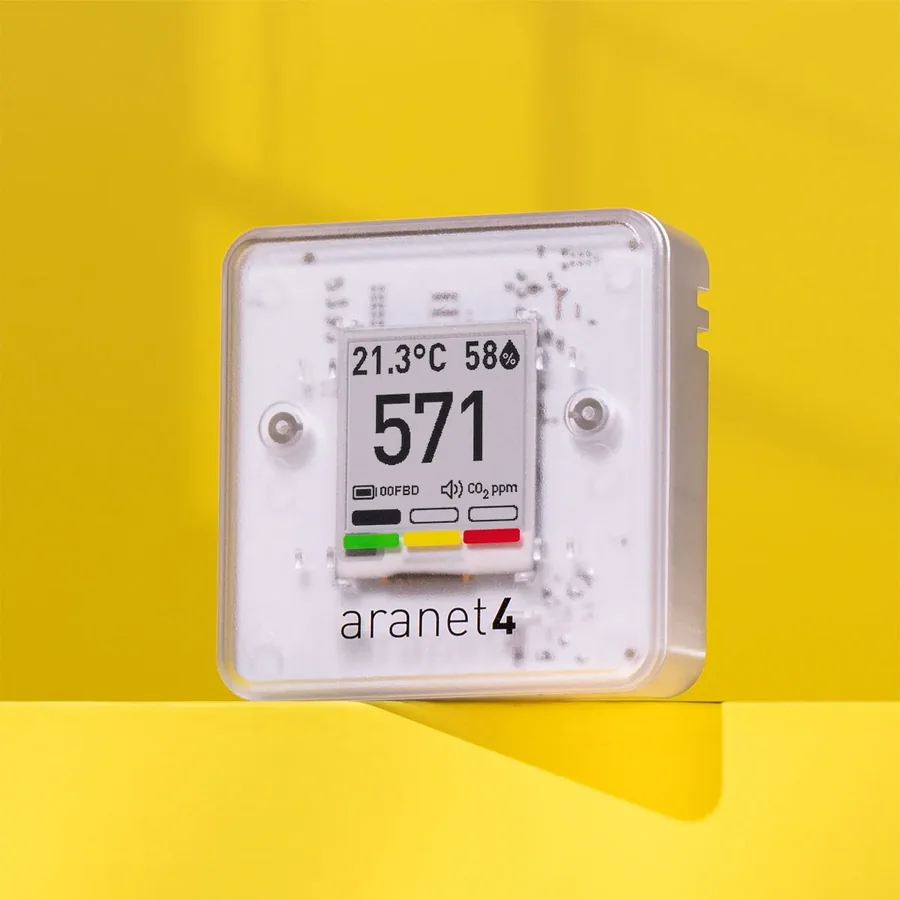
Aranet4 HOME
Reads itselfPair once with the code on its screen. Each morning the app reads the night from the monitor’s memory. No typing.
Battery powered, records every 5 minutes.
SwitchBot Meter Pro CO2
Android listens overnightYour phone records the night from the monitor’s Bluetooth signal while it stays in the room.
Use it on USB power so it updates every minute.
Any true CO2 monitor
One number a dayType the night’s highest reading each morning (a little above the average, so it errs on the strict side), or import a CSV export.
Look for NDIR on the box. “eCO₂” monitors estimate instead.
Read before you measure
Short guides that each end with something to try tonight.
What happens to bedroom air while you sleep
With the door and window shut, bedroom CO2 usually climbs through the night and levels off near morning, and a few simple things shape that curve.
Free fixesFree fixes to try before you buy anything
Three one-night experiments to try first: an open door, the fan or ventilation you already have, or a cracked window, and how to read the result.
Ventilation systemsHRV vs ERV: which one fits your home?
An HRV moves heat between fresh and stale air; an ERV moves heat and some moisture. How your climate and household shape the choice.
Your dashboard, on a bigger screen
Sign in on the web to see your room report, type in quotes as they arrive by email, and print the report to hand to an installer.
What should my bedroom’s CO2 be?
Is a high CO2 reading dangerous?
Do I need to buy a monitor?
What does the app cost?
Where does my data go?
Do installers pay to be in the app?
Is there an iPhone app?
Start with tonight.
Set the monitor up after dinner, sleep as usual, and log one number in the morning. Three nights from now you’ll know what your bedroom does.