Products
The things a home’s fresh air can involve, in the order you’d meet them. Each has its own page with plain facts, what isn’t known yet, and sources. Nothing here is ranked.
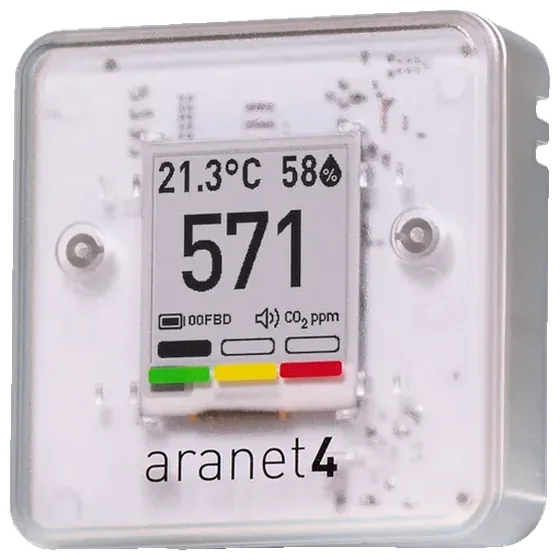 Aranet4
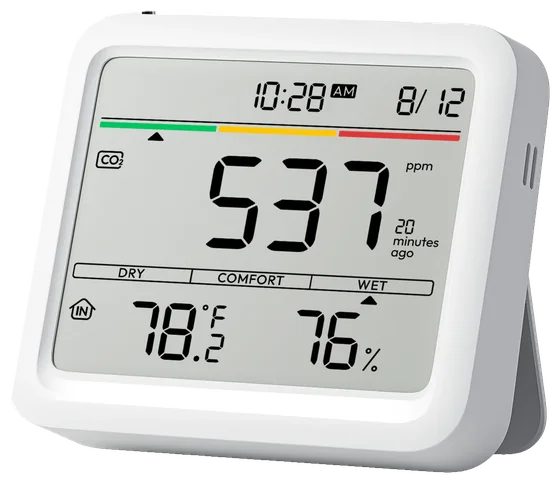 SwitchBot
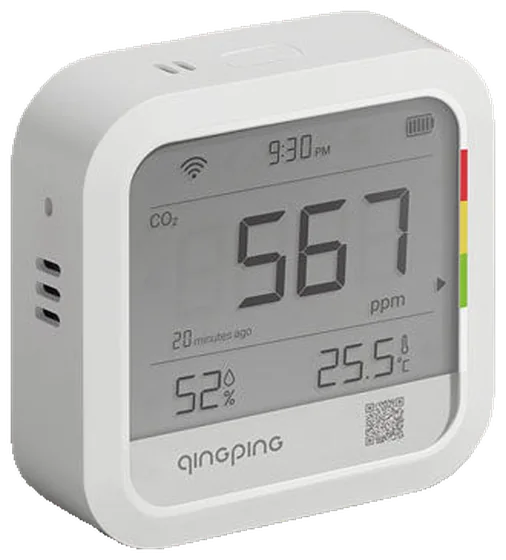 Qingping
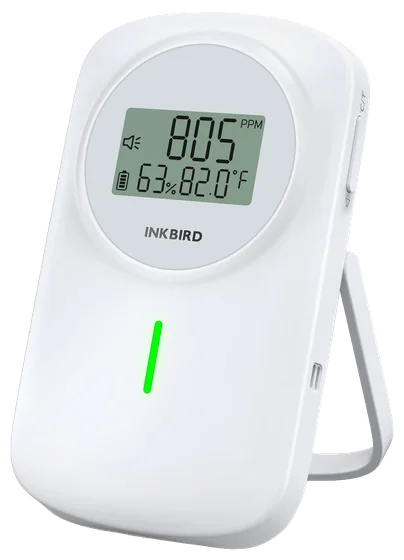 INKBIRD
- 1 · Measure
CO2 monitors
One in the bedroom shows whether the nights stay at 800 ppm or less. Any true CO2 monitor works, and the Android app records several on its own.
10 monitors - 2 · Bring in fresh air
HRV and ERV units
Balanced ventilation that keeps the heat. Each page has its certified airflow and a check against your bedrooms.
28 units, 8 HRVs and 20 ERVs - 3 · Turn it up when needed
CO2 controls
A control turns the system up when the bedroom needs air. The setting matters most: up at 750, never above 800.
12 controls and smart-home pieces - No ducts?
Room-by-room units
A unit in an outside wall of each bedroom, for homes with mini-splits, radiators or baseboard heat.
15 units
HRV or ERV, in plain words
- Fresh in, stale out Two fans swap stale indoor air for outdoor air all night, and can supply a closed bedroom.
- Keeps much of the heat The two streams pass through a core, so winter air comes in warmed. An open window can’t.
- HRV or ERV? HRV: heat recovery ventilator (heat). ERV: energy recovery ventilator (heat and some moisture).
- Not a purifier A purifier cleans the air you have but brings none in, so CO2 stays put.
Measure first: you may not need one.HRV vs ERV guideUnits we’ve reviewed
Planning where it all goes? Scan and plan tools, with a room-by-room planner.
Side by side: compare monitors · compare HRVs and ERVs · compare CO2 controls