CO2 controls
A CO2 control turns an HRV or ERV up when the bedroom needs air, then back down. It’s set by the number, so the setting matters most.
The setting:up at 750 ppm, back at 650, never above 800. Many come set to 1,000. Why, and how to add one
Before you buy one
- Plain fact: Keep it running on its normal speed the rest of the timeThe control only adds to it. Switched off below the setting, the house can fall short of the fresh air codes expect.
- Worth knowing: One sensor turns up the whole systemThe bedroom still gets only its own share of the air. Put the sensor in the bedroom that gets stuffiest, at about head height, away from the bed, windows and grilles.
- Worth knowing: High speed has to be quiet enough to sleep throughTry it at bedtime with the door shut before you rely on it. People switch off systems that wake them.
Your monitor still has the final word
A control’s sensor turns the unit up; your own monitor in the bedroom shows whether the nights actually average 800 or less. Keep it in the same spot and compare a few nights before and after.
Made by the ventilator’s maker
Sold for a maker’s own units, with the wiring in its manuals. An installer fits them.
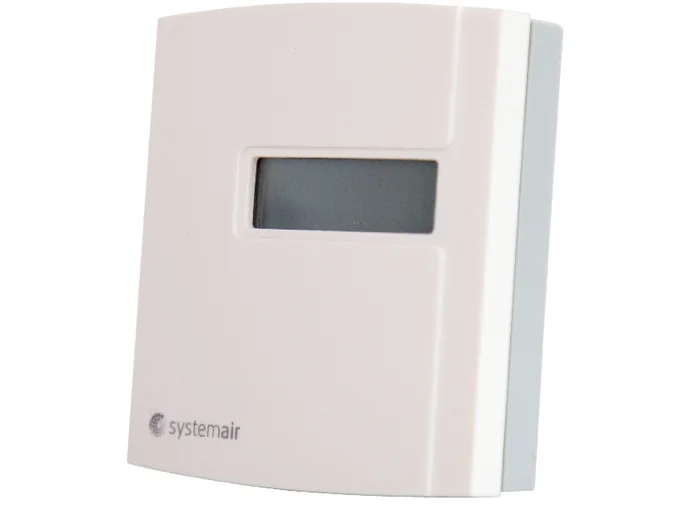
Fantech CO2RT-R (item 99315)
Setting range not published
A Regin-made CO2 controller Fantech sells with its commercial units. Its switch point isn’t published.
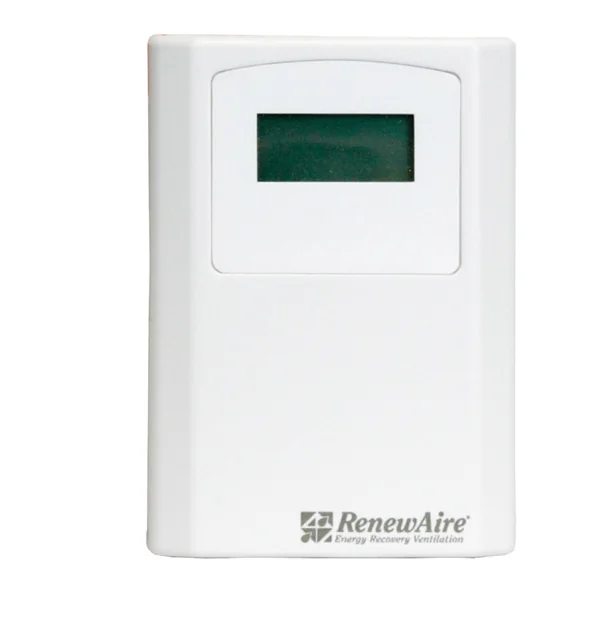
RenewAire CO2-W (wall) and CO2-D (duct)
Can be set under 800
RenewAire’s own CO2 controller. Above its trip point it runs an EV-series ERV on high speed.
S&P SCO2-W
Can be set under 800
S&P’s adjustable CO2 control, listed for its TRC and TRPLe ventilators.
Zehnder CO2 sensor (0–10 V) with the Option Box
Can be set under 800
Zehnder’s own room sensor. Through the Option Box, a ComfoAir Q raises its airflow gradually as CO2 rises.
Wall CO2 controllers with a relay
A sensor that closes a switch above its setting. Wired to a unit’s high-speed input, it runs the unit on high until CO2 drops. Commercial products; an installer fits them.
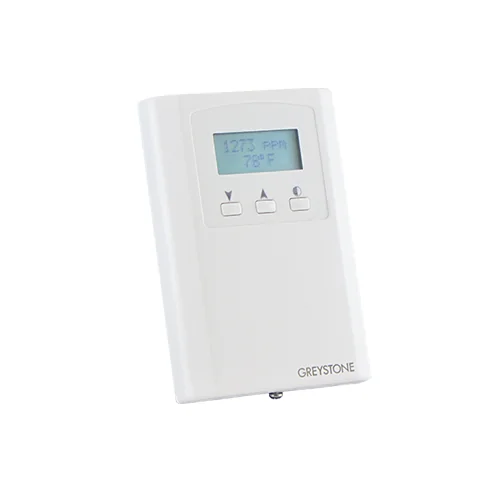
Greystone CD2RMC
Setting range not published
A building-controls room sensor with a 0–10 V output and an optional relay. Its relay range wasn’t published where we looked.
Greystone CDD4A
Can be set under 800
A room CO2 sensor whose relay can be programmed from 500 to 2,000 ppm on its keypad.
Kele CD-AW
Can be set under 800
A flush wall CO2 controller with a true dry contact. Ships set to 1,000 ppm, so it has to be set lower.
Telaire Ventostat T8100-R / T8200-R
800 out of the box; lower not published
Ships switching at 800 ppm. Lower settings need Telaire’s software, and its range isn’t published.
Smart-home pieces
Use a monitor you already own to switch high speed. Not documented by any ventilator maker: low-voltage inputs only, and check your manual first.
Home Assistant
Switches on your monitor’s reading
Free software on an always-on computer at home. It can read your CO2 monitor and switch a relay at 750 and 650.
Shelly 1 Gen3
Switches on your monitor’s reading
A small Wi-Fi relay with a potential-free (dry) contact, which Home Assistant controls with no cloud.
SwitchBot Bot, triggered by the Meter Pro CO2
Switches on your monitor’s reading
A small arm that presses a wall control’s boost button when a SwitchBot Meter Pro CO2 passes a level. No wiring.
Zooz ZEN17 universal relay
Switches on your monitor’s reading
A Z-Wave relay with two dry contacts and a timer that can switch it back off on its own.
From the makers’ own documents, read October 17, 2026. Not a ranking: within each kind, A to Z. A setting we couldn’t find in the maker’s documents says so.