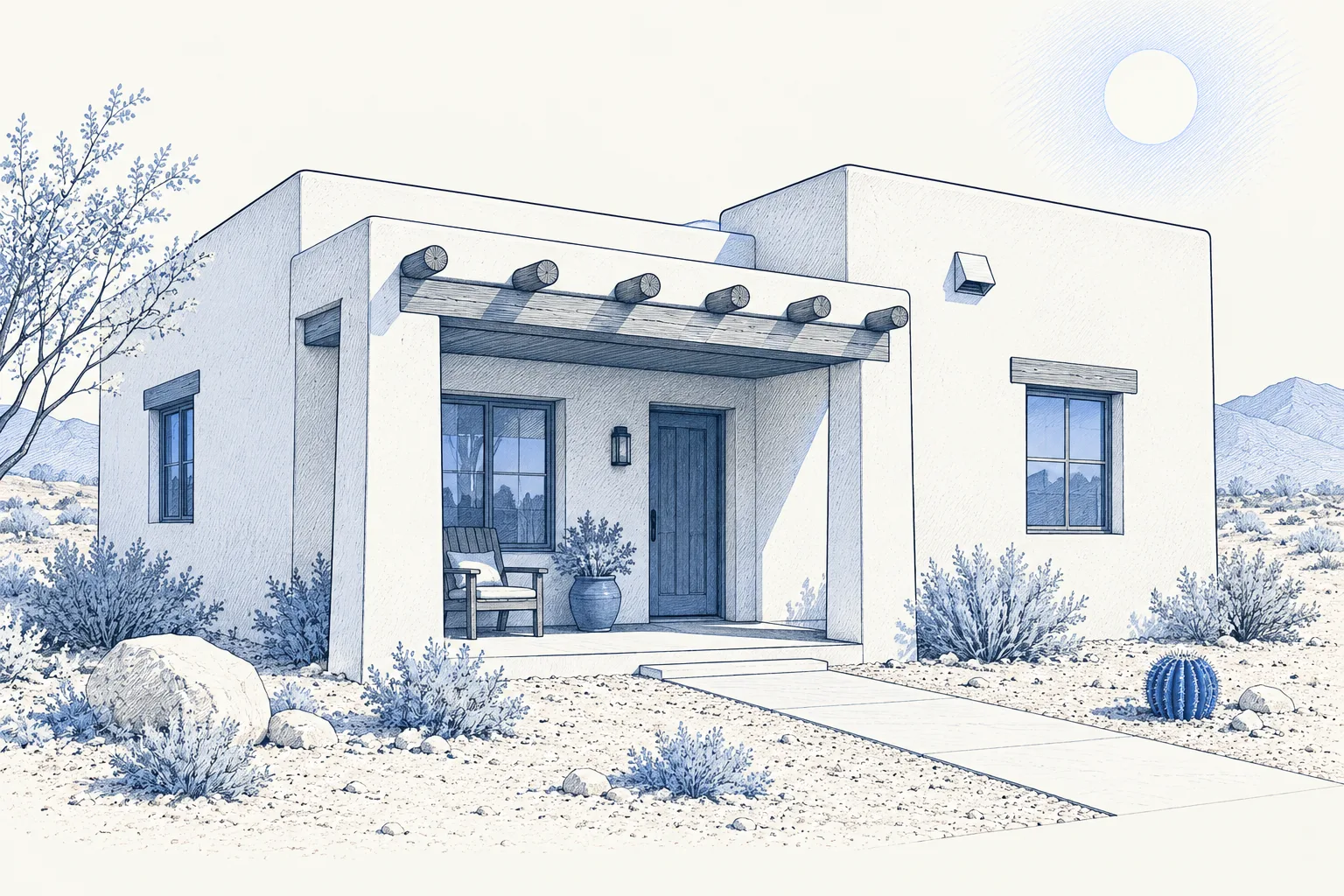
A desert summer makes “keep the heat out” an obvious goal. But the system also has to work through cooler nights, winter and, in some areas, a humid monsoon period. Give the installer the full story.
Phoenix and Las Vegas are examples of hot, dry regional conditions. Higher-elevation Southwest communities may fit the dry mountain guide better. Local weather and your home's cooling system matter more than the state line.
First question: how does your house cool itself?
Tell the installer whether you use refrigerated air conditioning, evaporative cooling, or both. DOE describes evaporative cooling as an option for dry climates and notes that its usefulness changes with humidity. Do not assume a design drawn for an air-conditioned home transfers unchanged to yours. DOE's cooling guide explains these different approaches.
Ask the designer to describe what happens when each piece of equipment runs. This guide does not prescribe operating windows, pressure settings or a combined control sequence.
HRV or ERV? Ask what moisture recovery would do
Both recover heat; an ERV also transfers moisture. A house that already feels too dry can have a different priority from one with substantial indoor moisture. Building Science Corporation's examples show why occupancy and the enclosure belong in that comparison.
“Desert” is a reason to ask better questions, not a model recommendation.
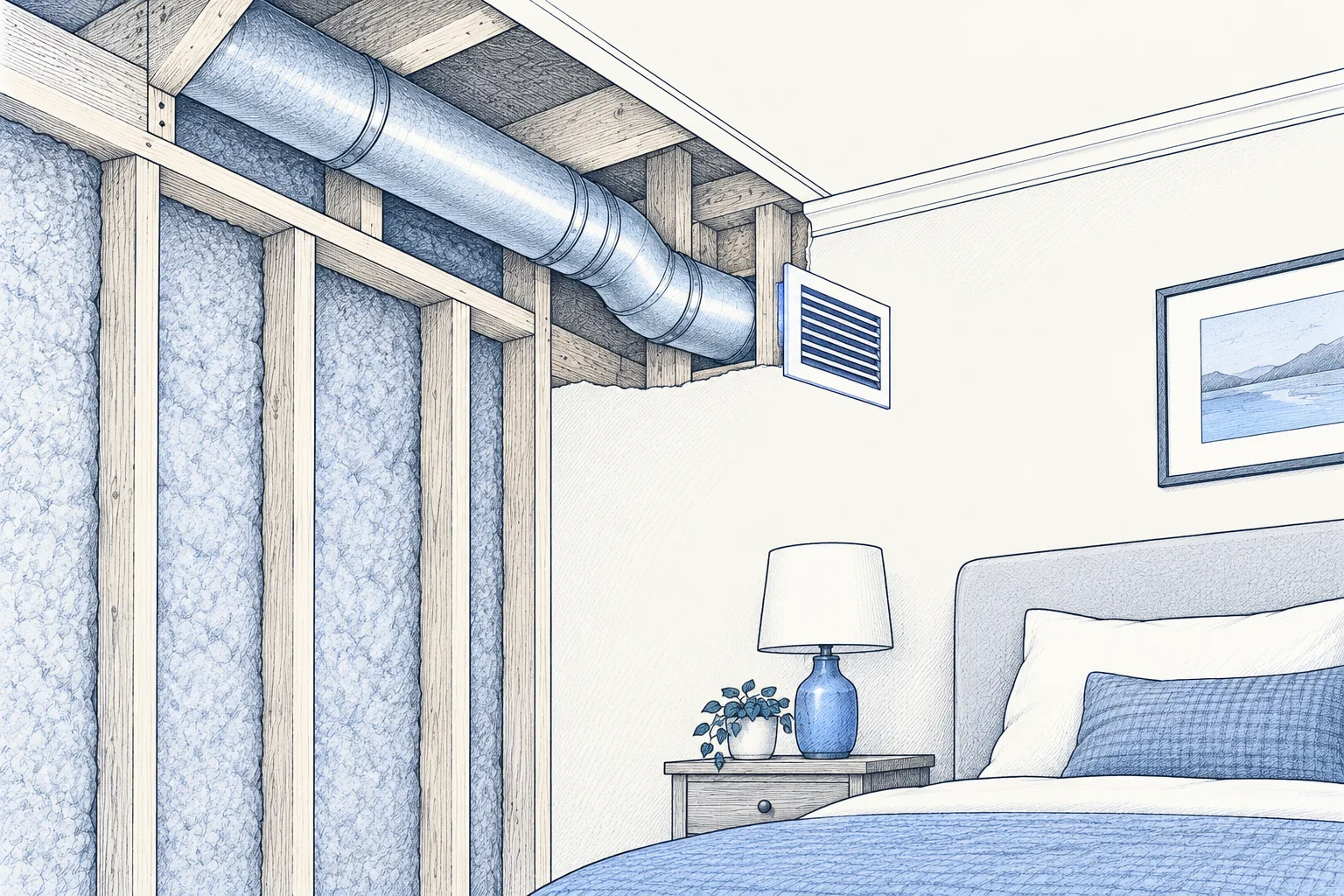
Put the duct route beside the efficiency number
Ask where the unit will live, where its ducts will run, and how you will reach the filters. Request a drawing simple enough to follow from the outdoor intake to the bedroom.
For a proposal that shares AC ducts, ask whether ventilation needs the central fan and how that affects operation. For a separate duct system, ask where the new grilles and access panels will go. DOE describes both arrangements in its ventilation overview.
Your comparison sheet
| Include this line | Ask for this answer |
|---|---|
| Cooling equipment | How ventilation operates with each cooling mode |
| Seasonal humidity | Why this core suits your home's dry and humid periods |
| Installed airflow | Planned airflow at the proposed ducts, filters and operating speed |
| Filter provision | Supported filter rating, replacement size and access |
| Outdoor-air controls | What to do during dust or smoke, and how normal operation resumes |
| Handover | Measured balance, room delivery and a control demonstration |
Don't buy “free cooling” without the explanation
If an installer proposes night cooling or a bypass, ask for the conditions under which it operates, how outdoor air quality is considered and what cooling work remains for your existing equipment. A feature name is not a comfort guarantee.
Bring a bedroom air record to the conversation and read the smoke guide before settling on filters and controls.
Before you request a quote
- Identify whether the home uses refrigerated AC, evaporative cooling, or both.
- List dry-season and humid-season observations, with humidity readings if available.
- Ask how ventilation, cooling, filtration and outdoor-air controls will operate together.