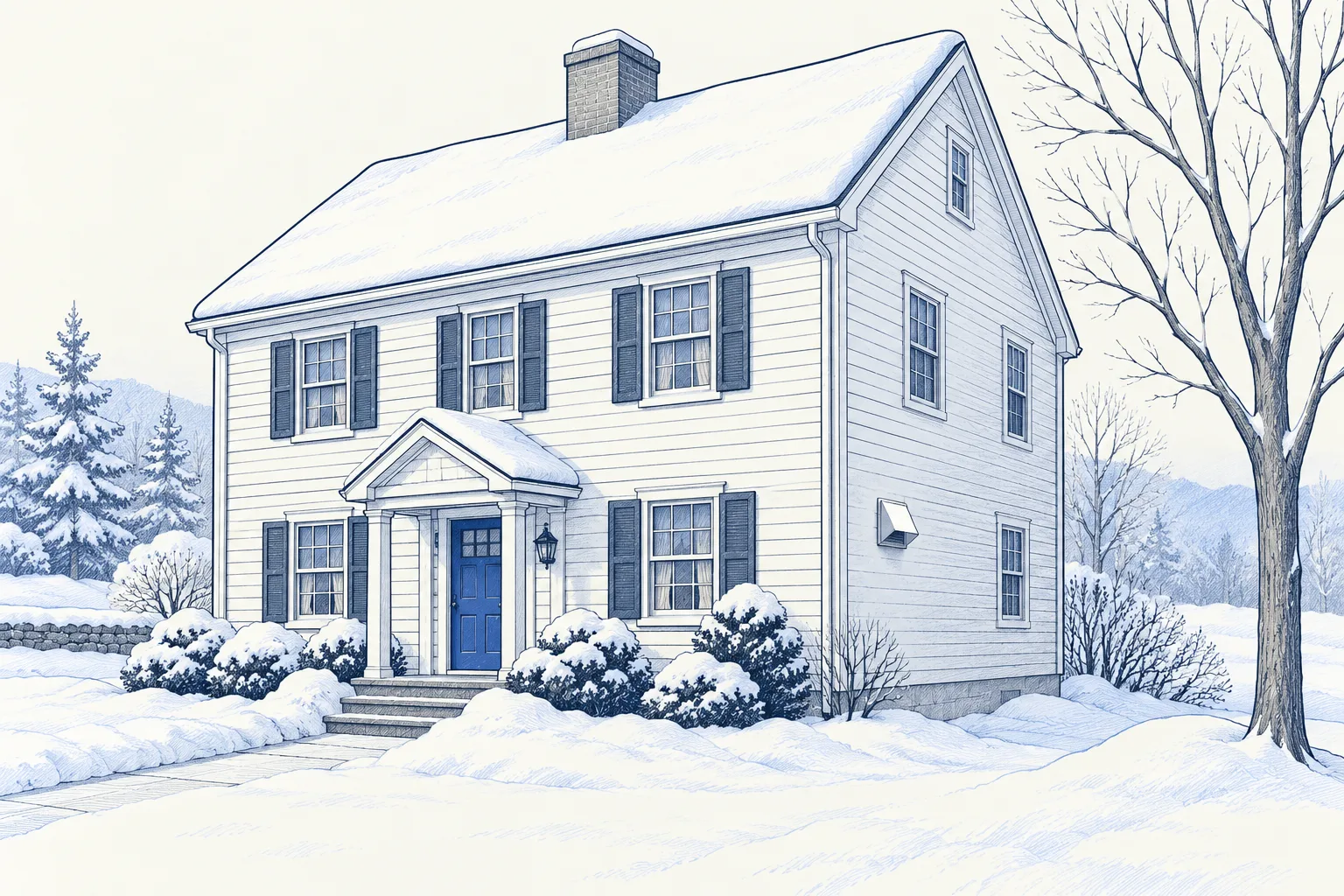
A system can look excellent in a brochure and spend your coldest night doing something the brochure headline never explains: defrosting. Make that part of the buying conversation early.
This guide is for homes with sustained freezing weather, including northern New England and the Great Lakes. Colder inland and high-elevation homes may need the same questions. Regional names are starting points; use the actual winter design conditions for your address.
The decision that changes the shortlist
Compare both HRVs and ERVs with a documented cold-weather strategy. Then ask how each would handle your home's winter moisture. An ERV transfers some moisture between the air streams; an HRV does not. That can be a useful difference, but the letters alone do not establish cold-weather performance. HVI explains the distinction.
Persistent window condensation deserves investigation. It can reflect indoor moisture meeting a cold surface; turning up a humidifier to a generic target may make it worse. A suitable winter humidity level depends on the home and outdoor conditions. University of Minnesota Extension explains why.
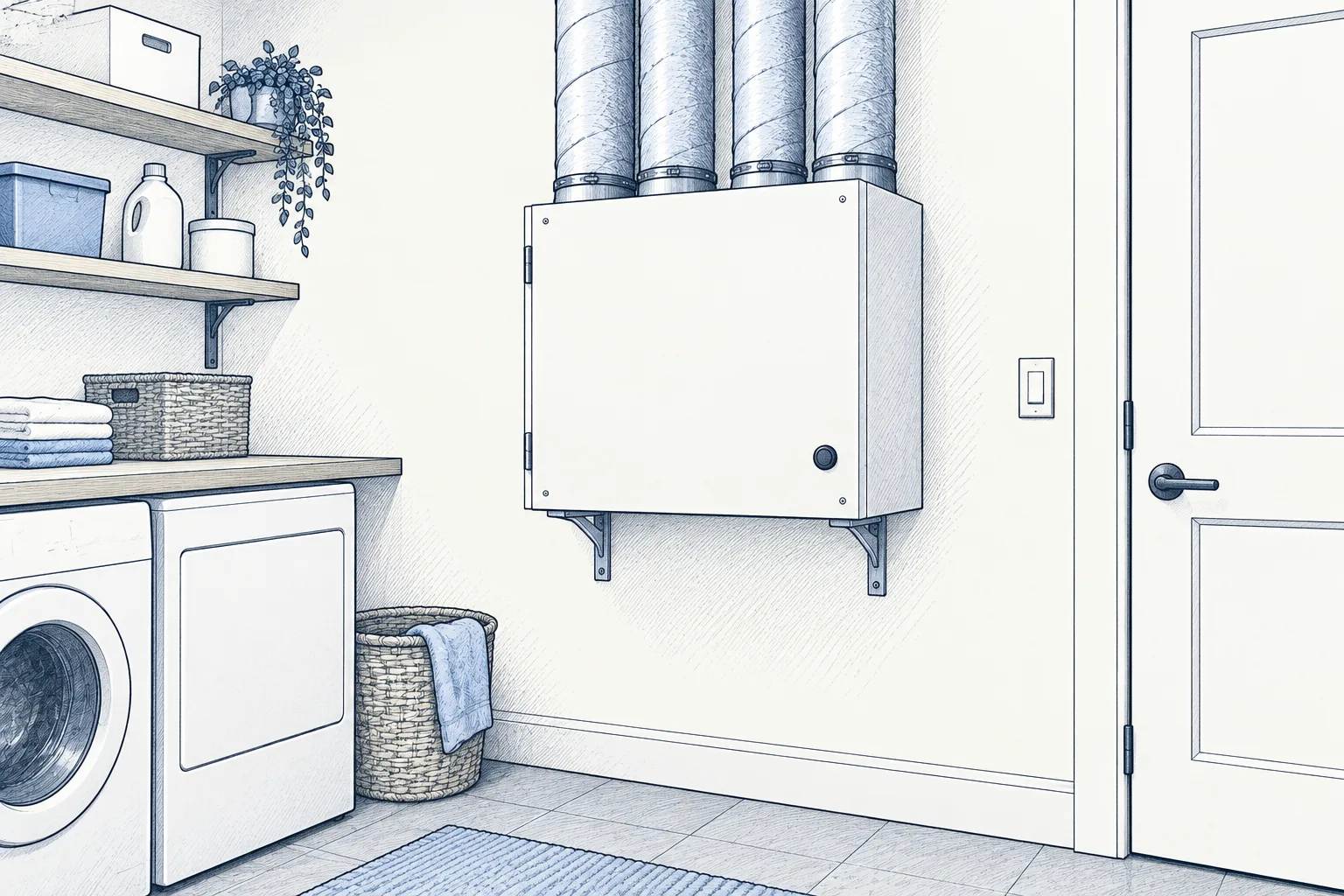
The question to ask about a freezing night
“When this exact model protects itself from frost, how much outdoor air still reaches the bedrooms?”
Some strategies use a preheater. Others temporarily reduce or stop the incoming outdoor air. Those choices affect electricity use, air delivery and sometimes pressure balance. A 2014 Fairbanks field study found that the tested ERVs could operate in cold weather with adequate frost management, but their defrost strategies reduced fresh-air delivery. That study does not rate today's entire market; it explains why the control sequence matters.
Put these details in the quote
| Ask for | A useful answer includes |
|---|---|
| Winter operating conditions | The local design temperature and the exact model's operating limits |
| Frost protection | What triggers it, whether supply pauses, and any preheater power requirement |
| Outdoor terminations | Intake and exhaust locations, snow clearance and service access |
| Condensate handling | Whether this model requires a drain, where it runs, and how freezing is prevented |
| Bedroom delivery | Planned airflow, operating speed, noise treatment and a measured handover report |
Use this as a request for documented design, not a DIY installation checklist. The unit's instructions and local requirements determine the details.
Two homes on the same street
Imagine one household asking, “Why are the windows wet?” and another asking, “Why do we need the humidifier all winter?” Give the installer those observations before asking which type they sell most often. Request a written explanation of how the proposed core and controls address your particular pattern.
Bring the conversation back to your bedroom
Start with a fair three-night check, and record indoor humidity separately. After installation, repeat the check during a cold spell as well as ordinary weather. A commissioning report and a bedroom record answer different questions; keep both.
Before you request a quote
- Write down winter humidity readings and whether your windows collect persistent condensation.
- Ask each installer for the exact model, cold-weather control sequence and design outdoor temperature.
- Ask for the expected outdoor airflow during frost protection and a room-by-room commissioning record.