The rule of thumb: about 17 cfm (8 liters per second) of outdoor air for each person sleeping in the room, delivered while they sleep. Two people: about 34 cfm. That's what the 2025 ASHRAE review found it takes to hold a bedroom at the 800 ppm goal.
The 800 ppm goal is easy to state. This guide is about what it takes to get there, and how to tell whether a fix will.
Why the number is per person
CO2 in a bedroom comes from the people breathing in it. The more people, the more outdoor air it takes to keep the level down. The room's size mostly changes how fast CO2 climbs, not where it ends up: a big bedroom just takes longer to reach the same level. With very little ventilation, though, a large room may still be climbing at dawn, so its night average reads lower than a small room's.
That's why the guidance is "per sleeper" rather than "per room." A bedroom that's fine for one person can build up with two.
| People sleeping in the room | Outdoor air for about 800 ppm |
|---|---|
| 1 | About 17 cfm (8 L/s) |
| 2 | About 34 cfm (16 L/s) |
| 3 | About 51 cfm (24 L/s) |
Treat these as rough targets. Monitors, people and homes vary, and the measured result is what counts.
Why so many bedrooms fall short
The review behind the goal notes that 8 L/s per person is at least twice what many current home ventilation standards provide. There are two reasons a well-built home can still miss it in the bedroom.
The standard is for the whole house. ASHRAE 62.2, the main US standard for homes, sets one rate for the whole dwelling: 0.03 cfm per square foot plus 7.5 cfm per person, assuming one more person than there are bedrooms. For a 2,000 sq ft, three-bedroom house, that's 60 + 30 = 90 cfm for the whole house. Its per-person part, 7.5 cfm, is less than half of 17, and the floor-area part goes to the whole house, not the bedroom. Spread across every room, the share reaching one closed bedroom can be far below the 34 cfm two sleepers need.
Bedrooms often aren't supplied directly. Many systems pull stale air out of bathrooms and the kitchen and let fresh air leak in wherever it can. Others mix the air inside the house without bringing any in: the EPA notes that most home heating and cooling systems, including forced-air systems, don't mechanically bring fresh air into the house. With the door shut, the bedroom is on its own.
Free changes, and how far they go
Try these one night at a time, and compare each with your usual nights. Free fixes to try first has the details and the cautions.
- The door open a few inches. It connects the bedroom to the rest of the house. It helps most when the rest of the house is itself well ventilated. In a study of new Scottish homes, bedrooms with the door open but windows shut still averaged about 1,550 ppm, and the few with both the door and window vents open averaged about 1,000. Fire-safety researchers also recommend sleeping with the door closed, so weigh that trade.
- Your existing ventilation on boost, or running all night. If you have an HRV, ERV or continuous exhaust fan, a higher setting may be enough. If it reaches the goal on boost, ask whether it can run that way quietly every night.
- A window cracked. The most direct outdoor air, when weather, outdoor air quality, noise and security allow. Rarely a year-round answer.
If a free change gets your typical night to 800 or less, and you can keep doing it, you may not need anything else.
Systems that can reach 800 with the door shut
A balanced system (an HRV or ERV) brings outdoor air in and sends stale air out, recovering most of the heat. For the goal, two things matter more than the brand:
- A fresh-air supply into each bedroom. Not just near it, and not just an exhaust somewhere else in the house.
- Enough air to each bedroom at the setting it will actually run on, about 17 cfm per sleeper, quietly enough that nobody turns it down.
A control that raises the speed when CO2 climbs, or on a nighttime schedule, can deliver more air to bedrooms when they're occupied without running high all day. HRV vs ERV covers which type suits your climate.
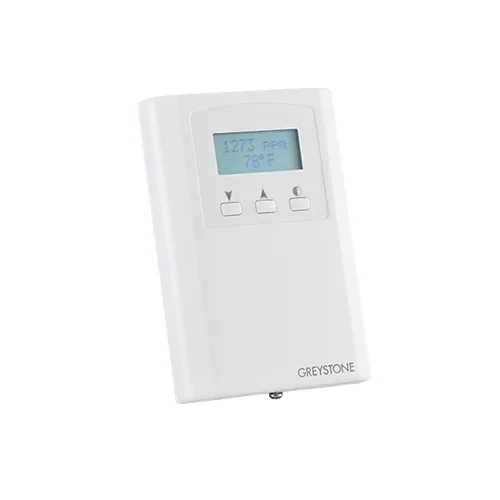 Greystone CD2RMCRoom CO2 transmitter
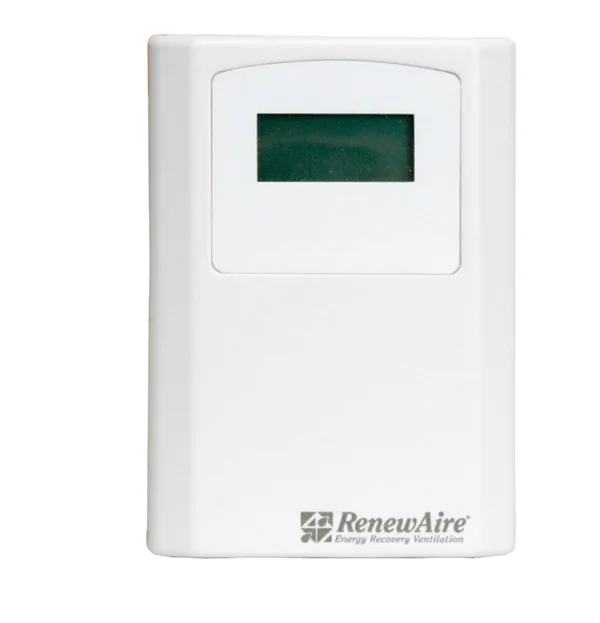 RenewAire CO2-WWall CO2 control
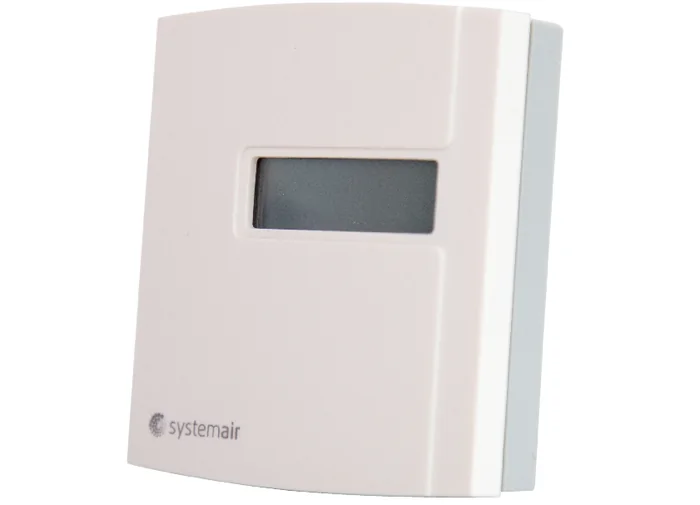 Fantech CO2 sensor 99315Shown with Systemair branding
What to ask an installer
Put your numbers in the request, so every quote answers the same question:
- "Our main bedroom has two sleepers and averages [your number] ppm overnight with the door shut. We'd like it at 800 ppm or less, which takes about 34 cfm of outdoor air to that room. How many cfm will it get on the normal setting?"
- "Will each bedroom have its own fresh-air supply?"
- "Will you measure the delivered airflow at each bedroom grille after install, and write it down?"
- "How loud is it in the bedroom at that speed?"
- "Can it speed up at night, or when CO2 rises?"
How to compare ventilation quotes lists the other essentials.
Prove it with the same monitor
After any change, free or paid, measure the same room the same way: same people, same door, same monitor spot. If the typical night is 800 or less, you're there. If a new system leaves the room above the goal, ask the installer to measure the airflow to that bedroom and adjust it; checking delivered airflow is part of commissioning. After the install walks through the recheck.
Tonight: Work out your bedroom's number
- Count how many people usually sleep in the bedroom with the door shut. A large dog adds some CO2 too.
- Multiply by 17. That's roughly how many cfm of outdoor air the room needs to stay near 800 ppm: about 34 cfm for two people.
- Write that number in the notes for your ventilation quotes, so every installer answers the same question.
- Sleep as usual and log the night. Your typical night shows how far the room is from the goal today.
Sources
- Akimoto et al. (2025), ASHRAE 1837-RP: New research on bedroom ventilation and sleep quality suggests that building standards should be revisited
- Waseda University: summary of the ASHRAE review (8 L/s per person to keep bedrooms at 800 ppm)
- ACCA: The 2016 update to ASHRAE 62.2 (whole-dwelling ventilation formula)
- US EPA: Improving indoor air quality (most forced-air systems don't bring in outdoor air)
- Sharpe et al. (2015): Occupant interactions and effectiveness of natural ventilation strategies in contemporary new housing in Scotland, UK
- UL Fire Safety Research Institute: Close before you doze